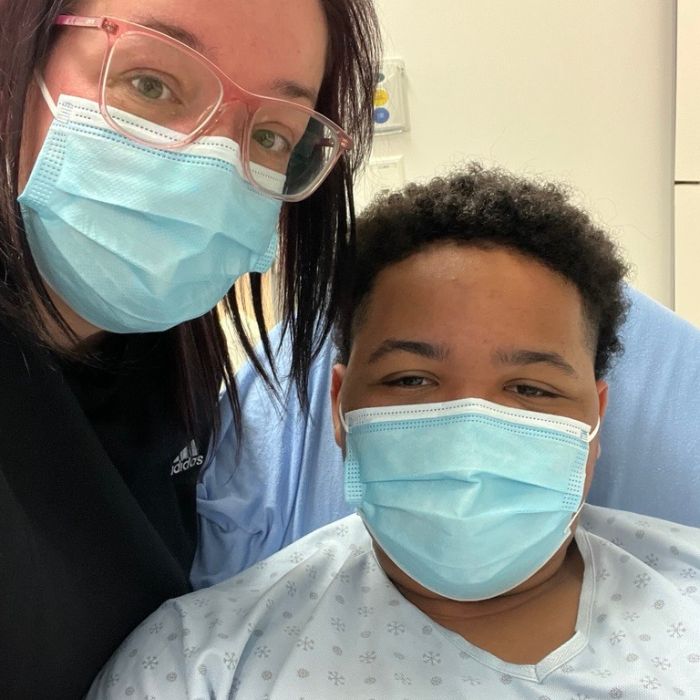


For a mother, seeing your child suffer without being able to explain why is nothing short of unbearable. And yet Marie-Ève and her son, William, spent years navigating uncertainty, doing so with courage and determination.
In 2020, William broke his ankle. It was frustrating, but nothing out of the ordinary for an active boy his age. However when he removed his walking boot, Marie-Ève noticed that William’s gait had changed. Despite their efforts—including physiotherapy, massage therapy, and occupational therapy—his symptoms worsened. A year later, he was unable to bend his right leg to walk normally, and he had the stiff gait of a marching soldier.
They searched for answers for several years, until they met Dr. Inge Meijer, one of the few pediatric movement disorder specialists in Canada, at CHU Sainte-Justine. Extensive testing, including gene sequencing, finally confirmed William’s condition: dystonia, a movement disorder that, in his case, causes involuntary and destabilizing muscle spasms.
I had mixed emotions when William was diagnosed. I was relieved to finally have some answers, but I also dreaded what lay ahead. Then he said to me, “Mom, why are you crying? This is the best day of my life!”
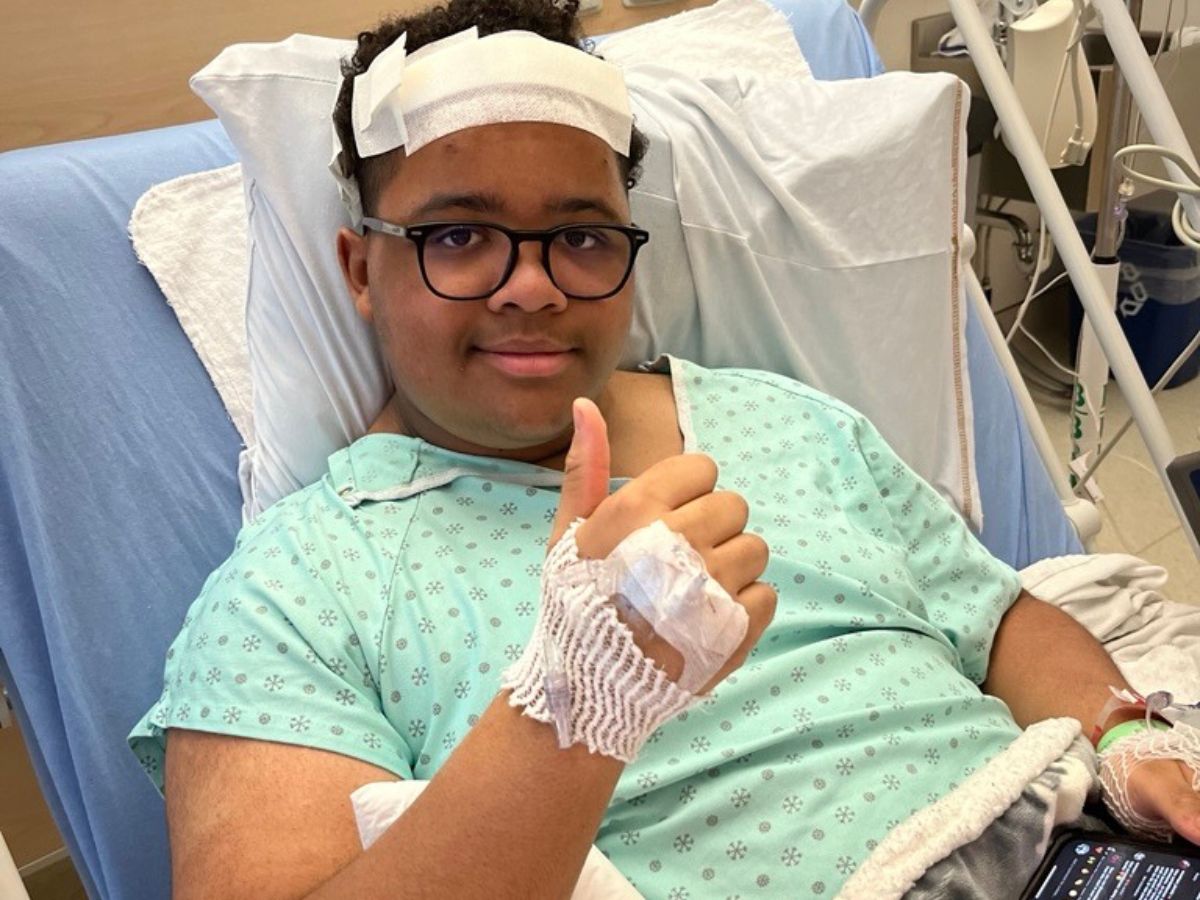
At the age of 15, William faced a monumental decision: whether or not to undergo complex surgery at Sainte-Justine, during which electrodes would be implanted deep in his brain and connected to a small battery placed in his chest. William decided to go through with it. It was the first procedure of its kind in Quebec to correct movement disorders performed by a multidisciplinary team of pediatric specialists.
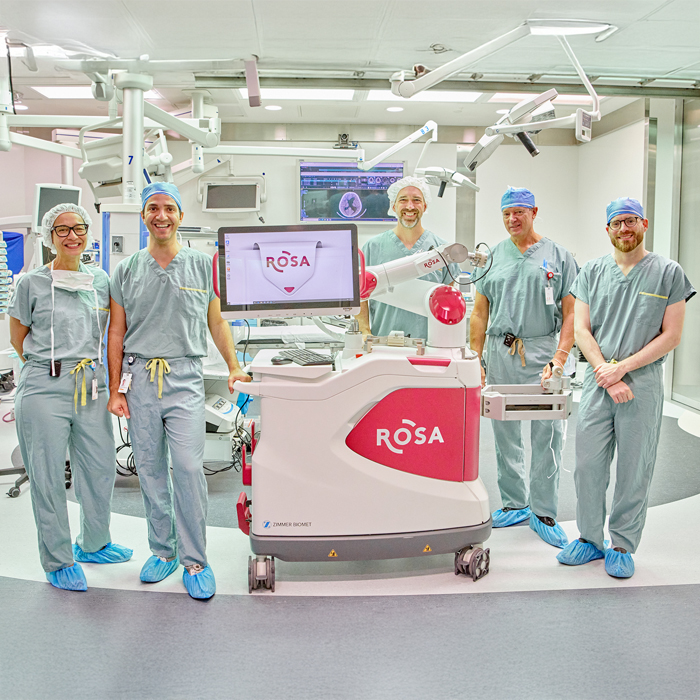
This success is an achievement of CHU Sainte-Justine’s brain mapping and comprehensive neuromodulation program. Made possible through the generosity of valued members of our donor community—including Marie-Christine Rey and Philippe Leduc, Marcel Lussier, Dan Charron, and the À la mémoire d’Anna fund—this program offers new options and renewed hope for patients who have not responded to traditional treatments. Armed with cutting-edge technologies such as neurostimulators and the ROSA™ neurosurgical robot, the care teams involved in this program are fundamentally transforming lives, including those of William and his loved ones.
Nearly one and a half months after Wiliam’s operation, Dr. Meijer activated the electrodes that were placed in his brain. He was warned that the changes would be gradual and might take some time… That very evening, Marie-Ève got a video call: William, visiting a friend, was walking normally! Suddenly, the upheaval of the last few years seemed like a distant memory.
CHU Sainte-Justine’s brain mapping and comprehensive neuromodulation program has given William back far more than his ability to walk. He’s now making up for lost time, much to his mother’s delight: “He walks 20,000 steps a day, plays basketball, goes out with his friends: I’ve hardly seen him this summer. And I couldn’t be happier about it.” Thanks to the generosity of kind-hearted people like you, William is now enjoying life to the fullest.