

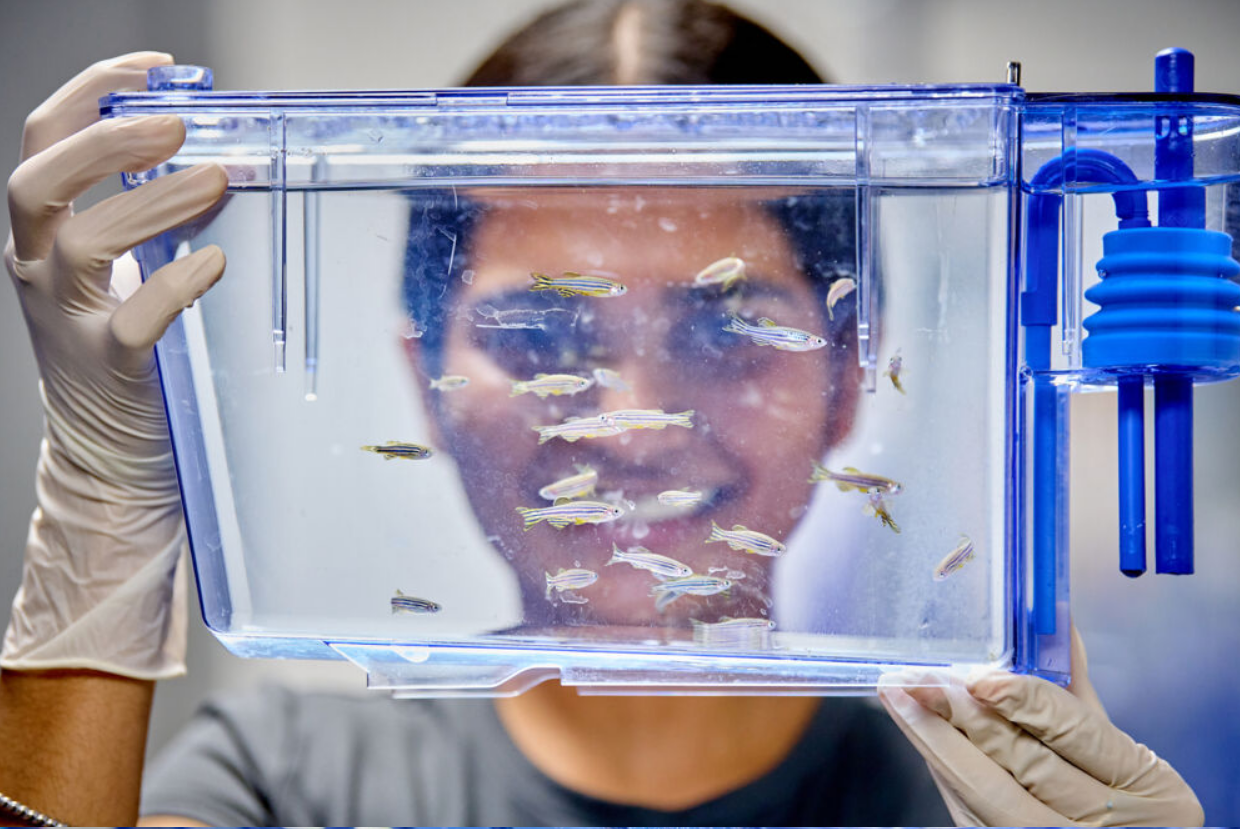
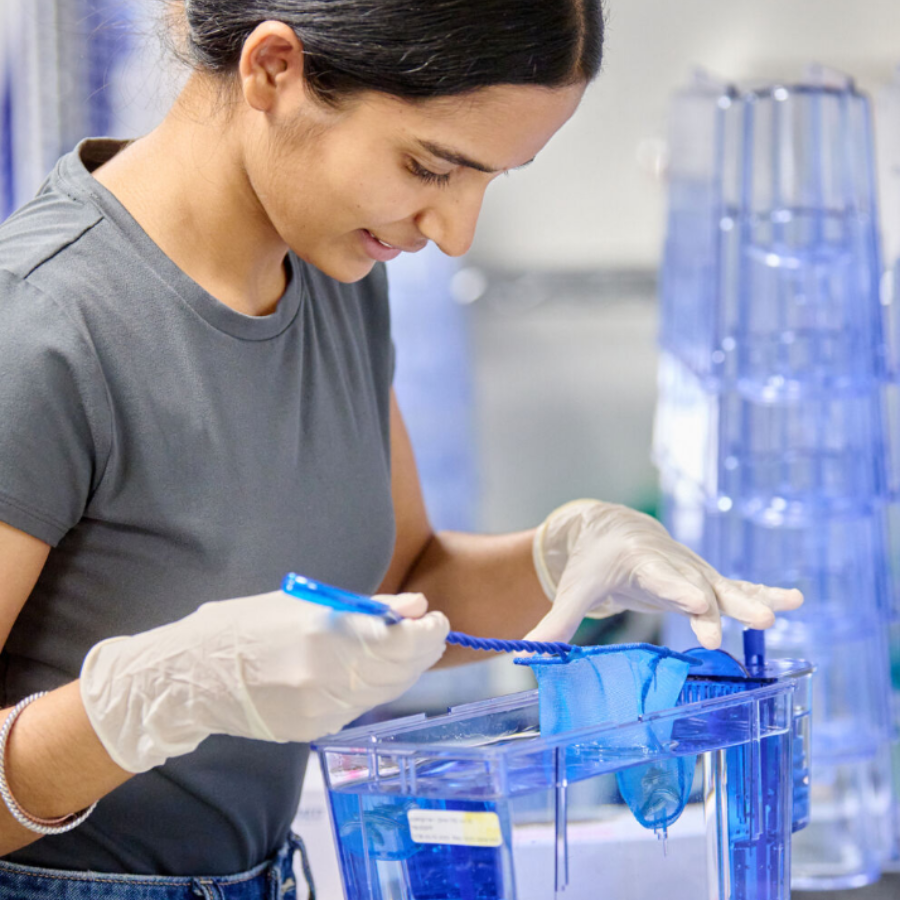
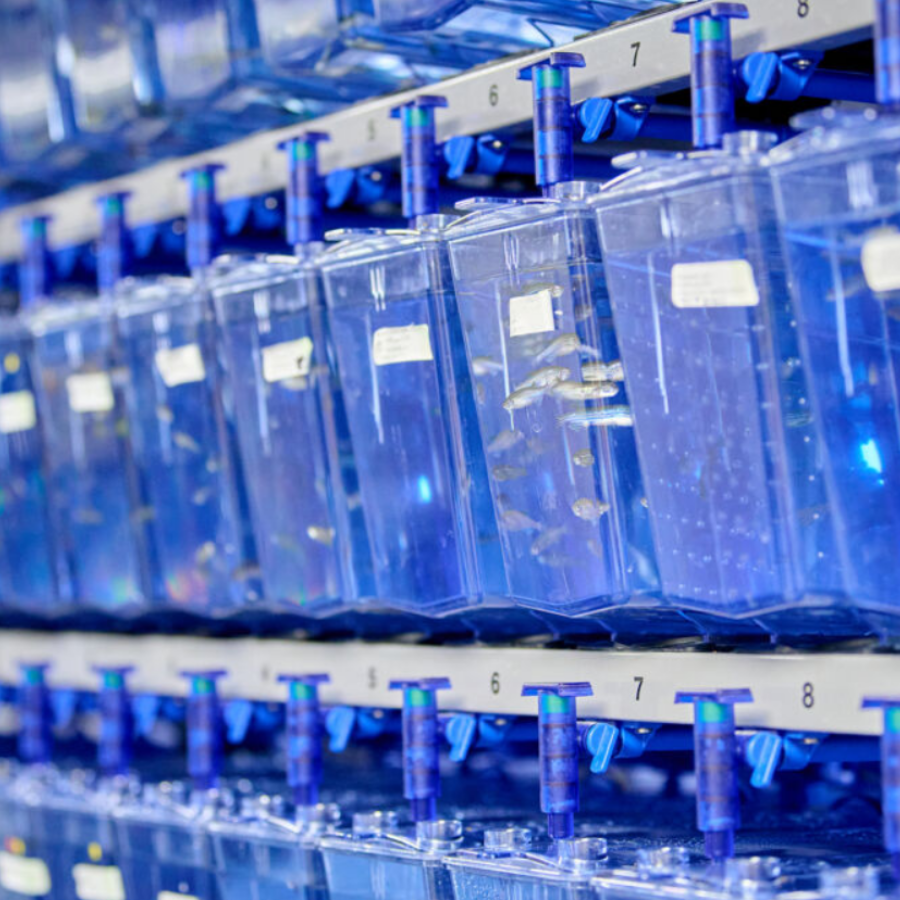
What if one of the secrets to healing the hearts of children were hiding in the heart of a tiny fish? That’s the promising avenue being explored by Professor Rubén Marín Juez’s research team. They’re trying to understand the remarkable ability of the zebrafish heart to regenerate following an injury—compared to a human heart, where permanent scar tissue forms.
As good as new in no time
A human heart damaged by an infarction—more commonly known as a heart attack—never fully regains its strength. A permanent scar forms at the site where the cells died after being deprived of oxygen, leaving the heart a bit more fragile than before. Children with certain heart conditions can also exhibit this type of cardiac scarring, referred to as fibrosis.
Similarly, zebrafish also develop fibrosis immediately after sustaining damage to their heart, which helps stabilize the injury. But then something extraordinary happens: The scar tissue is gradually replaced by new heart cells until it disappears altogether. After this healing process, which takes about three months, the zebrafish’s heart is as good as new.
Could this exceptional characteristic inspire new treatments for humans, among whom cardiovascular diseases are the leading cause of death? Could it pave the way for better therapies for the many children born with a heart defect? Professor Rubén Marín Juez thinks so.
“The zebrafish has a unique trait: an adult heart that regenerates on its own. Yet the mechanisms that limit excessive fibrosis and promote regeneration are still poorly understood.”
Striking a balance between scarring and regeneration
The latest discovery made in Professor Juez’s laboratory shines the spotlight on an essential protein that’s found in the outer layer of the zebrafish’s heart. It’s called fibulin‑2.
Its role is to maintain a balance between fibrosis and regeneration. The secret to the heart’s repairing itself efficiently doesn’t lie in eliminating scarring altogether, but in striking a delicate balance between scarring and regeneration. “Manipulating fibulin‑2 could become a new therapeutic target,” said Gülsüm Kayman Kürekçi, who conducted this latest research at Professor Juez’s lab. “It would enhance the heart’s ability to regenerate after a heart attack, for example.”
To explore the therapeutic potential of fibulin-2, Professor Juez’s team is working with other researchers to test cardiac patches designed for the controlled release of this protein.
Gaining a better understanding of heart defects
The zebrafish heart’s ability to regenerate isn’t the only surprising characteristic drawing the attention of researchers like Professor Juez—there’s also the fact that a zebrafish develops a functioning heart just 24 hours after fertilization.
Such rapid growth gives researchers a unique opportunity to observe each stage of typical—or atypical—cardiac development. “For instance, blood vessels were long seen simply as conduits that carry blood throughout the body,” Professor Juez explained. “By studying the zebrafish, we were able to demonstrate that blood vessels also coordinate the growth of heart muscle from very early on in cardiac development.”
This discovery could lead to a better understanding of the origin of congenital heart defects—cardiac malformations that develop at the same time as the fetus. For example, a network of blood vessels that supply the heart with insufficient or irregular blood flow in the very early stages of fetal development may contribute to the formation of heart defects.
1 in every 100
- One in a hundred children is affected by a congenital heart defect, making it the most common congenital malformation.
- In most cases, the cause of the birth defect is unknown.
- Serious birth defects affect one in every four children and require extensive care or surgery in their first year of life.
Donor engagement: a driver of innovation
Every day at the Centre de recherche Azrieli du CHU Sainte-Justine, close to 300 research teams like that of Professor Juez pull out all the stops to find answers to the most complex medical questions. Your generosity allows them to work with state-of-the-art technology, recruit the brightest scientific minds, and turn bold ideas into groundbreaking discoveries and, in turn, more effective treatments for children across Quebec.
Over the last few decades, major advances in imaging enabled the earlier detection of heart defects. Coupled with new, minimally invasive surgical techniques, these advances have dramatically increased the survival rate of children born with cardiac malformations. Today, more of them are reaching adulthood than ever before.
Breakthroughs like these continue to be made thanks to people like you, who open your hearts to improve the care available to children born with fragile ones. Thank you for supporting innovation!